

Few topics have changed the U.S. kratom market as quickly as 7-OH. Across 2025 and 2026, federal agencies and several states moved against concentrated 7-hydroxymitragynine products, while traditional kratom leaf stayed legal in most of the country. For shoppers, the practical question is simple: what separates the two, and how can you be sure you are buying natural kratom rather than a concentrated 7-OH product? This guide answers that in plain terms, using public information from the FDA, the DEA and published research.
What 7-OH Actually Is
7-hydroxymitragynine, usually shortened to 7-OH, is one of the alkaloids associated with Mitragyna speciosa, the Southeast Asian tree whose leaves are sold as kratom. Researchers have identified more than 50 alkaloids in the plant. Mitragynine is the most abundant of them, while 7-OH appears only in small amounts.
A 2025 study in the Journal of AOAC International found no detectable 7-OH in fresh kratom leaf. In post-harvest leaf, the researchers measured roughly 0.003% to 0.04%, and described it as a byproduct of oxidation after harvest. The DEA’s July 2026 Federal Register notice likewise describes 7-OH as making up less than 2% of total alkaloids in raw leaf.
How Concentrated 7-OH Products Are Different
The products regulators are targeting are not simply “strong kratom.” They are tablets, gummies, drink shots and similar items that contain 7-OH at levels far above anything the leaf produces. The same AOAC study measured some of these products at 22 to 75 milligrams of 7-OH per gram, levels the authors said could only be reached by adding 7-OH or chemically converting other alkaloids.
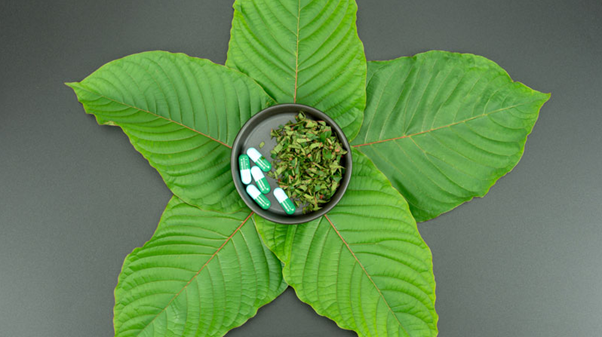
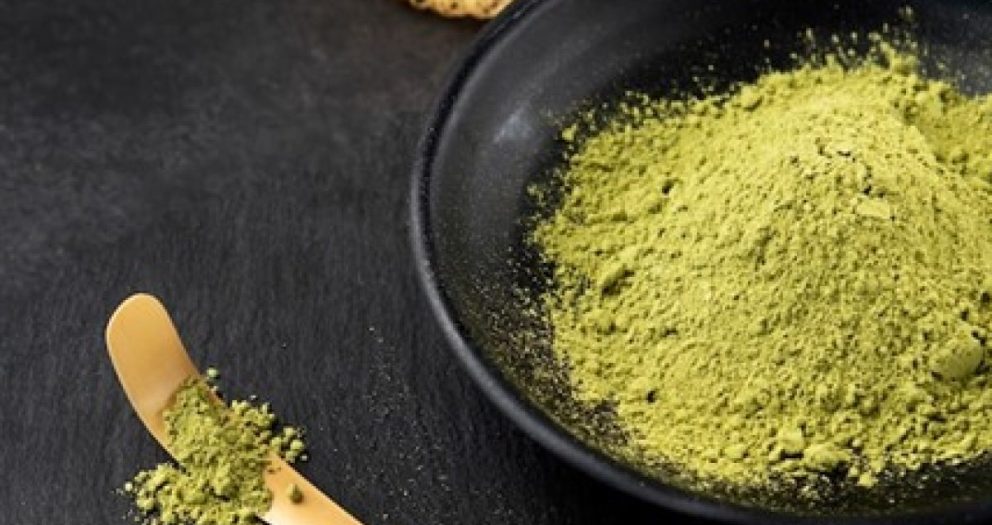
Put simply, a concentrated 7-OH product is a processed, semi-synthetic item. Natural kratom powder and capsules are dried, ground leaf that carries the plant’s own alkaloid profile.
What Federal Agencies Have Done
The federal timeline shows how clearly regulators separate the two categories:
- June 2025: the FDA issued warning letters to seven companies selling concentrated 7-OH products.
- 29 July 2025: the FDA recommended that the DEA schedule certain 7-OH products and stated that the action targets concentrated 7-OH, not natural kratom leaf.
- 6 July 2026: the DEA published a notice of intent to temporarily place 7-OH above a set threshold in Schedule I. The proposed threshold is more than 0.050% 7-OH by dry weight for botanical material, or more than 1.00 mg per unit for processed products.
- 26 August 2026: three related compounds (mitragynine pseudoindoxyl, MGM-15 and MGM-16) were temporarily placed in Schedule I.
As of late September 2026, a final temporary scheduling order for 7-OH itself had not been published. Because this can change quickly, check the Federal Register for the latest status before relying on any summary, including this one.
State Action on 7-OH
Several states acted before Washington did. Florida’s Attorney General used an emergency rule in August 2025 to place concentrated 7-OH in Schedule I. Ohio adopted a permanent Board of Pharmacy rule in May 2026 that bans 7-OH and related compounds while leaving natural leaf legal. Rhode Island now caps 7-OH levels under its licensing law, and North Dakota’s 2026 law bans 7-OH products while allowing natural kratom for adults. Our 2026 state-by-state kratom law guide covers the states where kratom is banned outright.
How to Make Sure You Are Buying Natural Kratom
A few simple habits separate natural leaf products from concentrated 7-OH items:
- Read the ingredients. A natural product lists kratom leaf (Mitragyna speciosa) and nothing else.
- Be cautious with tablets, gummies or shots that advertise 7-OH, list milligrams of 7-OH per piece, or promise “alkaloid enhanced” formulas.
- Check the certificate of analysis. A natural product shows mitragynine as the dominant alkaloid, with 7-OH at trace levels.
- Buy from vendors that publish testing. Botanical Remedies posts third-party lab tests (COAs) and explains its quality and testing process, which covers alkaloids, adulterants, heavy metals and microbial safety.
Our kratom powder and kratom capsules are made from dried, ground leaf. For a closer look at the plant’s chemistry, read Unlocking the Mysteries of Kratom Alkaloids.
Frequently Asked Questions
Is 7-OH the same thing as kratom?
No. 7-OH is one alkaloid linked to the kratom plant, and natural leaf contains it only in trace amounts. Concentrated 7-OH products are processed items that regulators treat separately from leaf.
Does the DEA’s proposed 7-OH scheduling affect natural kratom?
The DEA has said botanical kratom with naturally occurring 7-OH below the proposed threshold is not affected. State and local laws still apply, so check where you live.
Has the FDA approved kratom or 7-OH?
No. The FDA has not approved kratom for any medical use, and there are no FDA-approved 7-OH drugs.
This article is for general information only and is not legal or medical advice. Laws change often; confirm current rules before you buy.
References
- HHS: FDA recommends scheduling of 7-OH products (29 July 2025)
- DEA press release on temporary scheduling of 7-OH and related substances (1 July 2026)
- Federal Register notice of intent on 7-OH (6 July 2026)
- Federal Register temporary order for MGPI, MGM-15 and MGM-16 (26 August 2026)
- Journal of AOAC International study on 7-OH in leaf and products (2025)
- Ohio Board of Pharmacy kratom notice


Write a comment
Your email address will not be published. All fields are required