How To Use Superior Red Dragon Kratom: 7 Kratom Rules To Know
What Exactly Is Red Dragon Kratom? It is a popular, upgradeable Red Thai Powder. It is an extract of a few particular plants that promote relaxation and tranquility.



When a kratom vendor says its products are "lab tested," the phrase covers several very different tests. Alkaloid testing measures what is in the product. Contaminant testing checks for what should not be there. The second category, especially heavy metals and microbial testing, is the one that most directly protects buyers. This guide explains what those tests look for, why they matter, and how to read the results.
Kratom is an agricultural product. Leaves are grown in tropical soil, harvested by hand, dried and ground, often far from where they are sold. Plants can absorb metals from soil and water, and moisture during drying or storage can allow bacteria, yeast and mold to grow. Two public health events show why screening matters:
A heavy metals panel usually covers four elements:
Results are typically reported in parts per million (ppm) or parts per billion (ppb) and compared with a limit. Many labs refer to United States Pharmacopeia (USP) daily exposure limits for dietary supplements, while some states set their own standards. A result marked "ND" means not detected at the lab's reporting limit.
Microbial panels look for harmful bacteria and for signs of poor hygiene or storage. Common tests include:
Limits vary by standard and product type. Raw dried herbs are often held to looser microbial limits than processed extracts, so compare results against the standard the lab names on the report.
Some COAs also include mycotoxins (toxins produced by certain molds), pesticide residues and foreign matter. Utah's kratom testing rules, for example, require panels for alkaloids, microbials, heavy metals, mycotoxins, pesticides and foreign matter, carried out by an ISO/IEC 17025 accredited lab.
For a full walkthrough of a report, including the alkaloid panel, read our guide on how to read a kratom third-party lab report before you buy.
According to our quality page, each batch is lab tested and reviewed before approval. Testing covers identity, alkaloids, adulterants, heavy metals (lead, arsenic, cadmium and mercury) and biological safety (Salmonella, yeast, mold, coliforms, E. coli and Staphylococcus). Results are published on our lab tests (COAs) page. Good storage at home also matters after testing, so see our guide on how to store kratom properly for long-term freshness.
ND means not detected: the contaminant was below the lab's reporting limit.
Not always. Trace metals occur naturally in plants. The question is whether levels fall within accepted limits.
No. Requirements vary, but several consumer protection laws now require accredited third-party testing.
This article is for general information only and is not medical advice.

Kratom and kava are often mentioned in the same breath. Both are traditional botanicals, both are sold in powder form, and both have become more visible in the U.S. through specialty shops and online stores. Beyond those surface similarities, they are very different plants with different histories, active compounds and regulatory situations. This guide sets out the key differences so you can understand each one on its own terms.
Kratom comes from Mitragyna speciosa, a tropical evergreen tree in the coffee family (Rubiaceae). It is native to Southeast Asia, including Thailand, Malaysia and Indonesia, and the product is made from its leaves.
Kava comes from Piper methysticum, a shrub in the pepper family (Piperaceae). It is native to the Pacific Islands, and researchers believe it was first cultivated in northern Vanuatu around 3,000 years ago. Kava products are made from the root, not the leaves.
The two plants rely on entirely different groups of compounds:
Because the compounds differ, the experiences people describe also differ. Kava is traditionally associated with relaxation and social gatherings. Kratom users report a wider range of effects that vary by strain and amount. In both cases these are reports from users, not clinically established outcomes, and neither botanical is FDA-approved to treat any condition. Our article Unlocking the Mysteries of Kratom Alkaloids explains kratom's chemistry in more detail.
Kratom leaves were traditionally chewed fresh or brewed into tea by laborers in Southeast Asia, often as part of a working day. Our article on kratom around the world: cultural and traditional uses covers this history.
Kava has a strong ceremonial and social role in Pacific Island cultures. Traditionally, the root is ground, mixed with water and strained through cloth into a shared bowl. Kava ceremonies are still used to welcome guests and mark important occasions in Fiji, Vanuatu, Tonga and Samoa.
Each botanical carries its own safety discussion. For kava, the main concern has been the liver. The FDA issued a consumer advisory in 2002 about rare reports of severe liver injury linked to kava supplements. Germany restricted kava the same year, although a German court overturned that ban in 2014. Research suggests that solvent-based extracts may carry more risk than traditional water-based preparations.
For kratom, recent attention has centered on product quality and on concentrated 7-OH products, which federal and state regulators treat separately from natural leaf. Contamination is also a known issue across the botanical market, which is why independent testing matters.
Kava is not a controlled substance and is sold as a dietary supplement. An FDA memo in 2020 concluded that kava is not generally recognized as safe for use in conventional foods, which affects kava beverages more than capsules.
Kratom leaf is also not federally controlled, but state law varies widely. As of September 2026 it is banned in several states, including Alabama, Arkansas, Indiana, Vermont, Wisconsin, Louisiana, Connecticut, Kansas and Tennessee, with a temporary ban in Massachusetts. Our 2026 state-by-state kratom law guide has the details.
Whichever botanical you are researching, the same buying principles apply: clear labeling, a named source, and third-party testing for identity and contaminants. At Botanical Remedies, we publish our lab tests (COAs) and explain our quality process. You can explore our natural kratom powder range there.
No. Kratom comes from the leaves of Mitragyna speciosa (coffee family), and kava comes from the root of Piper methysticum (pepper family).
Kava is not a controlled substance, and kratom state bans generally do not cover it. Check local rules to be sure.
Their combined effects have not been well studied. Speak with a healthcare professional before combining any botanicals.
This article is for general information only and is not medical advice.

Traveling with kratom raises questions that rarely come up at home. Can it go in a carry-on? What happens at airport security? Is it a problem to drive through a state where kratom is banned? The answers depend less on the airline or the car and more on the laws of every place you pass through. This guide covers the key points for flights, road trips and crossing state lines as of September 2026.
The TSA's "What Can I Bring?" list does not include a specific entry for kratom. Its general rules for supplements and powders apply:
That last point matters. If you fly out of, or into, a state where kratom is banned, local law applies from the moment you are there. TSA screening does not make a product legal.
Kratom is legal under federal law but banned in several states. As of September 2026, statewide bans are in force in Alabama, Arkansas, Indiana, Vermont, Wisconsin, Louisiana, Connecticut, Kansas and Tennessee, and Massachusetts has a temporary emergency ban from 28 August 2026. Some penalties are serious. In Tennessee, possession is a Class A misdemeanor under the ban that took effect on 1 July 2026.
Before any road trip, map your route against the latest state laws, including states you only drive through. Local ordinances can also apply inside otherwise legal states. Our 2026 state-by-state kratom law guide is a good place to start.
Taking kratom abroad carries far more risk. Kratom is banned or tightly controlled in many countries, including Australia, the United Kingdom, Japan, Singapore, Malaysia, Norway and a number of EU countries such as Denmark, Sweden, Poland, Ireland and Finland. Singapore in particular has a record of arresting travelers carrying kratom. Even Thailand, which legalized kratom in 2021, has its own rules. The safest approach is not to travel internationally with kratom at all.
Bringing kratom into the United States is also restricted. FDA Import Alert 54-15 allows officials to detain kratom imported as a dietary supplement or bulk ingredient.
If you are relocating within the U.S. rather than traveling, ordering directly to your new address is often simpler than carrying product with you, provided kratom is legal there. Our shipping details page explains how orders are packed and sent, and our article on kratom shipping times and discreet packaging covers what to expect. Botanical Remedies does not ship to jurisdictions where kratom is prohibited.
TSA has no specific kratom rule, and supplements are allowed. Large powder amounts in carry-ons may get extra screening, and state law at your departure and arrival airports still applies.
Possession in a ban state can be an offense even if you are only passing through. Plan routes to avoid ban states or leave kratom at home.
It is not recommended. Many countries ban kratom, and penalties can be severe.
This article is for general information only and is not legal advice. Confirm the rules for every place on your itinerary.
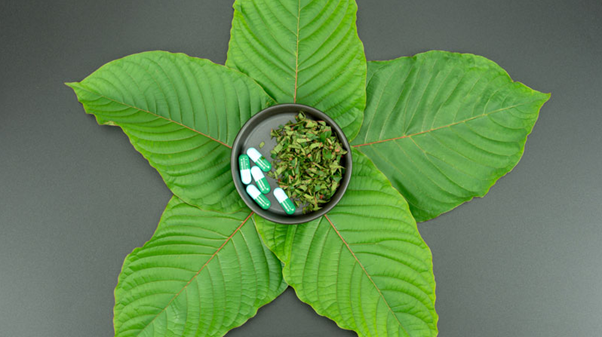
One of the most common questions from new buyers is also one of the simplest: how old do you have to be to buy kratom? The short answer is that it depends on your state, but the clear trend in 2026 is 21 and older. This guide explains where age limits come from, how they differ, and what to expect when you order online.
Federal law does not set a minimum age for kratom, because kratom leaf is not a federally controlled substance and has no FDA-approved use. Age limits come from state laws, most often a state version of the Kratom Consumer Protection Act (KCPA), and sometimes from city or county ordinances. In states without a kratom law, retailers usually set their own age policies.
Early consumer protection laws did not all agree on age. Utah's 2019 law, the first KCPA, set a minimum age of 18. Later laws increasingly set 21, in line with the federal minimum age for tobacco products. Examples of states that set 21 include:
Several other regulated states are also reported to set 21, while a few older laws still use 18. Because state laws are changing quickly, check your own state's statute or health department for the current figure.
Age only matters where kratom is legal to begin with. In states with full bans, including Alabama, Arkansas, Indiana, Vermont, Wisconsin, Louisiana, Connecticut, Kansas and Tennessee, and in Massachusetts under its 2026 emergency order, there is no age at which adults may legally buy it. Our 2026 state-by-state kratom law guide lists the details.
Botanical Remedies applies a single standard. Our terms and conditions state that only individuals who are 21 years of age or older and in good health may use kratom-containing products. We apply this even in states where the legal age is lower. A single 21+ standard is simple to follow, matches the direction of state law, and supports responsible use.
Online kratom sellers handle age requirements in several ways. You may be asked to confirm your age before entering the site, to provide a date of birth at checkout, or to pass an identity check. Some carriers or states may add further requirements over time. Providing accurate information protects you and keeps the order compliant. Before you order, also review our shipping details, since we do not ship to jurisdictions where kratom is prohibited.
Kratom is not approved by the FDA for any medical use, and research on its effects is still developing. Age limits reflect the same caution applied to other adult products. For adults who choose kratom, responsible habits matter just as much. Our guide to safe and responsible kratom powder usage covers starting low, avoiding risky combinations and paying attention to how you respond. Anyone with a health condition, or who takes medication, should speak with a healthcare professional before using kratom.
Only in places where state and local law allows 18 and the seller's policy permits it. Botanical Remedies requires customers to be 21 or older.
It depends on the seller and the state. Expect to confirm your age at checkout, and be prepared for identity checks.
Yes. Age laws apply to kratom products as a whole, regardless of format.
This article is for general information only and is not legal or medical advice.
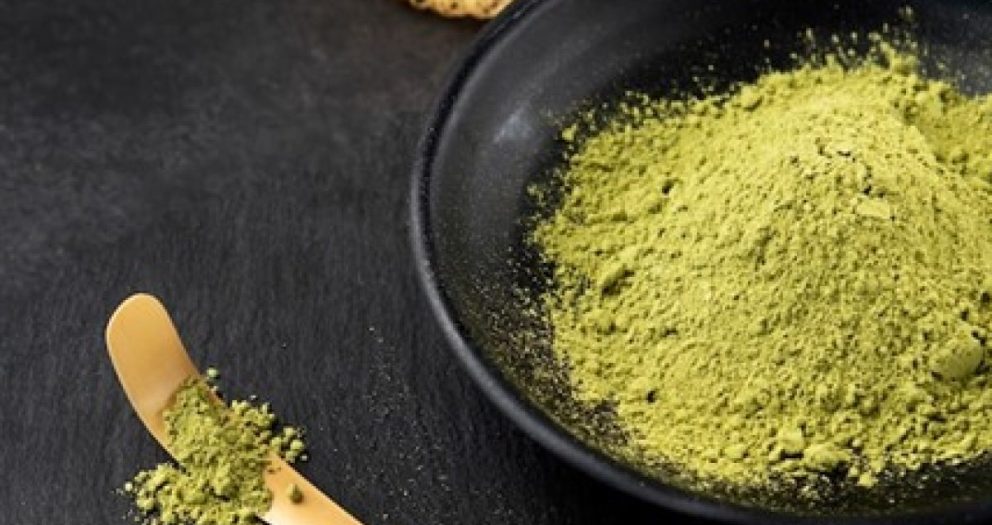
If you have read about kratom law, you have probably seen the letters KCPA. The Kratom Consumer Protection Act is not a single national law. It is a model framework that individual states adapt and pass in their own form. Its core idea is regulation instead of prohibition: keep natural kratom available to adults while setting rules that protect buyers from contaminated, mislabeled or adulterated products.
The model was promoted by the American Kratom Association as an alternative to outright bans. Utah passed the first state KCPA in 2019. Since then the list has grown steadily, and according to the American Kratom Association, Delaware became the 22nd state with a consumer protection law in September 2026. Recent additions include Minnesota, South Carolina, Mississippi and South Dakota.
Each state writes its own version, but most include the same building blocks. Utah's 2019 law, which many later laws followed, is a useful example:
The newest consumer protection laws go further than the early versions. Rhode Island's kratom act, effective 1 April 2026, adds licensing, child-resistant packaging, health warnings and a cap of 150 mg of mitragynine per serving. North Dakota's HB 1628, signed on 4 September 2026, bans synthetic kratom and 7-OH and requires labels to show mitragynine and 7-OH levels from accredited labs. These laws reflect wider concern about concentrated 7-OH products, which federal regulators are also moving to control.
Not yet. A Federal Kratom Consumer Protection Act was introduced in Congress in 2023 (S. 3039 and H.R. 5905). It would have limited how the FDA could regulate kratom and required a formal review, but neither bill was enacted. Federal action since then has focused on scheduling concentrated 7-OH and related compounds rather than creating a national consumer protection standard. In March 2026, a separate bill, the END 7-OH Act (H.R. 8000), was introduced to schedule synthetic 7-OH; at the time of writing it had been referred to committee.
In a KCPA state, you should expect the product in front of you to meet certain minimum standards: an age check, a label that discloses what is inside, and testing that screens out contamination and adulteration. You can use those same standards to judge any vendor, wherever you live:
For more on how vendors demonstrate manufacturing standards, see our article on the AKA GMP certified kratom vendor program, and review our own quality process.
No. It only applies in states that pass it. States with bans are not affected by KCPA laws elsewhere.
It depends on the state. Most recent laws set 21; some earlier laws set 18.
KCPA laws limit 7-OH, and several newer state laws ban concentrated 7-OH products outright.
This article is for general information only and is not legal advice. Confirm the current law in your state.
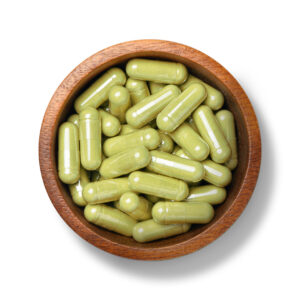
Concentrated 7-OH products often sit on the same shelves, and appear in the same search results, as traditional kratom. Some are clearly labeled. Others use vague marketing that makes them hard to tell apart from natural leaf. Because the FDA, the DEA and several states now treat concentrated 7-OH as a separate and more serious category, it pays to know how to spot it. These six checks take less than a minute.
Natural kratom is usually sold as fine leaf powder or as capsules filled with that powder. Most concentrated 7-OH products come in different formats: pressed tablets, gummies, drink shots, dissolvable strips or small "pills" that look like candy or medication. The FDA's 2025 warning letters specifically named tablets, gummies, drink mixes and shots. A different format is not proof on its own, but it is a reason to read more closely.
Many 7-OH products advertise it directly. Watch for these words and abbreviations:
Note that MGPI, MGM-15 and MGM-16 were temporarily placed in Schedule I on 26 August 2026, so any product naming them should be avoided entirely.
A natural kratom product should list Mitragyna speciosa leaf, or leaf extract, and little else. Be cautious if the ingredient list names isolated alkaloids, lists 7-OH as an ingredient, or hides the formula behind a "proprietary blend." Undisclosed ingredients are a red flag in any botanical product.
Concentrated products often state how many milligrams of 7-OH each piece contains. Natural leaf simply does not carry meaningful 7-OH per serving. A 2025 study in the Journal of AOAC International found only about 0.003% to 0.04% 7-OH in post-harvest leaf, compared with 22 to 75 milligrams per gram in some 7-OH products. If a label promises a specific 7-OH dose, you are not looking at natural kratom.
The certificate of analysis gives the clearest answer. In natural leaf, mitragynine is the dominant alkaloid and 7-OH is a trace component. Regulators now publish specific limits that show where "trace" ends:
If a product has no COA, or the COA leaves out 7-OH, you cannot rule it out. Our guide on how to read a kratom third-party lab report before you buy explains the alkaloid panel in detail.
Claims about being "stronger than kratom," promises of specific effects, or comparisons to prescription drugs are warning signs. Responsible sellers describe effects as reported by users and avoid medical claims, because the FDA has not approved kratom for any medical use.
If a product fails any one of these checks, set it aside. Asking the seller for a batch COA, or choosing a clearly labeled natural leaf product instead, is always better than guessing.
Extracts concentrate the natural alkaloids of the leaf, mainly mitragynine, rather than 7-OH. Our Enhanced Kratom Extract Powder product page states that our extracts test between 10% and 12% mitragynine (MIT). For more background, read Kratom Extracts Explained: What Makes Them Different From Powder. Batch results are published on our lab tests (COAs) page.
Not necessarily, but most concentrated 7-OH items use tablet, gummy or shot formats. Check the label and COA.
Yes, trace amounts can form after harvest. Natural leaf levels are far below the limits regulators have proposed.
Ask for a batch COA. Without one, you cannot confirm the 7-OH level.
This article is for general information only and is not legal or medical advice.

A certificate of analysis, or COA, is the closest thing a kratom buyer has to an independent quality check. It is also one of the most misunderstood documents in the market. Some shoppers treat any COA as proof of quality, while others skip it because it looks too technical. The truth sits in between: a COA tells you specific, useful things, but only if it is genuine, current and matched to the product in your hands.
A COA is a report from a testing laboratory that lists the results of analyses run on a sample from a specific production batch. For kratom, it usually covers identity, alkaloid content and contaminant screening. A good COA comes from a third-party lab with no financial stake in the result, which is what makes it more trustworthy than a vendor's own claims.
For a section-by-section walkthrough of those panels, see our guide on how to read a kratom third-party lab report before you buy.
A COA is only as useful as it is authentic. Before trusting one, check these details:
Even a perfect COA has limits. It describes one sample from one batch at one point in time. It cannot promise that every batch is identical, and it cannot show how a product was stored after testing. It only covers the tests that were actually run, so a report without a microbial panel says nothing about microbial safety. A COA also says nothing about how kratom will affect you. Effects described by users vary widely, and the FDA has not approved kratom for any medical use.
Botanical Remedies publishes third-party results on our lab tests (COAs) page. Our quality page explains the five checks each batch goes through: identity, alkaloid testing, adulterant testing, heavy metals and biological safety. If you have a question about a specific batch, please contact us.
Requirements vary by state, but a COA from an independent lab is the clearest way for a buyer to verify quality. Several consumer protection laws now require accredited lab testing.
In natural leaf, 7-OH should appear only at trace levels, far below mitragynine. A high 7-OH result suggests a processed product.
An in-house report is not independent. Look for a named third-party lab, ideally ISO/IEC 17025 accredited.
This article is for general information only and is not medical advice.

Kratom law in the United States changed more in 2025 and 2026 than in the previous decade. Several states added full bans, others replaced bans with licensing rules, and regulators drew a sharp line between natural kratom leaf and concentrated 7-OH products. This guide reflects the situation as of 23 September 2026. Because state rules are moving quickly, treat it as a starting point and confirm the current law where you live.
Kratom leaf is not a controlled substance under federal law. That does not mean it is federally endorsed. The FDA has not approved kratom for any medical use, and it treats kratom as an unapproved new dietary ingredient for import purposes. Federal enforcement in 2025 and 2026 has focused on concentrated 7-OH products and related semi-synthetic compounds rather than on natural leaf.
As of September 2026, kratom is banned statewide in the following states:
Not every change was a new ban. Several states moved toward regulation or narrower restrictions:
Many states regulate kratom rather than ban it, usually through a version of the Kratom Consumer Protection Act (KCPA). These laws typically set a minimum age, require labeling, ban synthetic alkaloids and limit 7-OH. Utah passed the first KCPA in 2019. According to the American Kratom Association, Delaware became the 22nd state with a consumer protection law in September 2026, with Minnesota, South Carolina, Mississippi and South Dakota also among recent additions.
State legality is only half the picture. Some cities and counties have their own rules. San Diego, California, and Sarasota County, Florida, are commonly cited examples, along with Union County, Mississippi. Denver, which is sometimes still listed, lifted its 2017 restriction shortly after adopting it. Always check your city and county ordinances as well as state law.
If you are new to kratom, browse our lab-tested kratom products once you have confirmed it is legal where you live.
Kratom leaf is not federally controlled, but the FDA has not approved it for any medical use. Federal scheduling action has focused on concentrated 7-OH and related compounds.
Connecticut (March 2026), Kansas and Tennessee (July 2026) and Massachusetts (August 2026, temporary) are the newest statewide bans. Louisiana's ban began in August 2025.
No. Shipping kratom into a state where it is prohibited is not allowed, and our checkout blocks those orders.
This article is for general information only and is not legal advice. Laws change often; confirm current rules with your state and local authorities.

Few topics have changed the U.S. kratom market as quickly as 7-OH. Across 2025 and 2026, federal agencies and several states moved against concentrated 7-hydroxymitragynine products, while traditional kratom leaf stayed legal in most of the country. For shoppers, the practical question is simple: what separates the two, and how can you be sure you are buying natural kratom rather than a concentrated 7-OH product? This guide answers that in plain terms, using public information from the FDA, the DEA and published research.
7-hydroxymitragynine, usually shortened to 7-OH, is one of the alkaloids associated with Mitragyna speciosa, the Southeast Asian tree whose leaves are sold as kratom. Researchers have identified more than 50 alkaloids in the plant. Mitragynine is the most abundant of them, while 7-OH appears only in small amounts.
A 2025 study in the Journal of AOAC International found no detectable 7-OH in fresh kratom leaf. In post-harvest leaf, the researchers measured roughly 0.003% to 0.04%, and described it as a byproduct of oxidation after harvest. The DEA's July 2026 Federal Register notice likewise describes 7-OH as making up less than 2% of total alkaloids in raw leaf.
The products regulators are targeting are not simply "strong kratom." They are tablets, gummies, drink shots and similar items that contain 7-OH at levels far above anything the leaf produces. The same AOAC study measured some of these products at 22 to 75 milligrams of 7-OH per gram, levels the authors said could only be reached by adding 7-OH or chemically converting other alkaloids.
Put simply, a concentrated 7-OH product is a processed, semi-synthetic item. Natural kratom powder and capsules are dried, ground leaf that carries the plant's own alkaloid profile.
The federal timeline shows how clearly regulators separate the two categories:
As of late September 2026, a final temporary scheduling order for 7-OH itself had not been published. Because this can change quickly, check the Federal Register for the latest status before relying on any summary, including this one.
Several states acted before Washington did. Florida's Attorney General used an emergency rule in August 2025 to place concentrated 7-OH in Schedule I. Ohio adopted a permanent Board of Pharmacy rule in May 2026 that bans 7-OH and related compounds while leaving natural leaf legal. Rhode Island now caps 7-OH levels under its licensing law, and North Dakota's 2026 law bans 7-OH products while allowing natural kratom for adults. Our 2026 state-by-state kratom law guide covers the states where kratom is banned outright.
A few simple habits separate natural leaf products from concentrated 7-OH items:
Our kratom powder and kratom capsules are made from dried, ground leaf. For a closer look at the plant's chemistry, read Unlocking the Mysteries of Kratom Alkaloids.
No. 7-OH is one alkaloid linked to the kratom plant, and natural leaf contains it only in trace amounts. Concentrated 7-OH products are processed items that regulators treat separately from leaf.
The DEA has said botanical kratom with naturally occurring 7-OH below the proposed threshold is not affected. State and local laws still apply, so check where you live.
No. The FDA has not approved kratom for any medical use, and there are no FDA-approved 7-OH drugs.
This article is for general information only and is not legal or medical advice. Laws change often; confirm current rules before you buy.
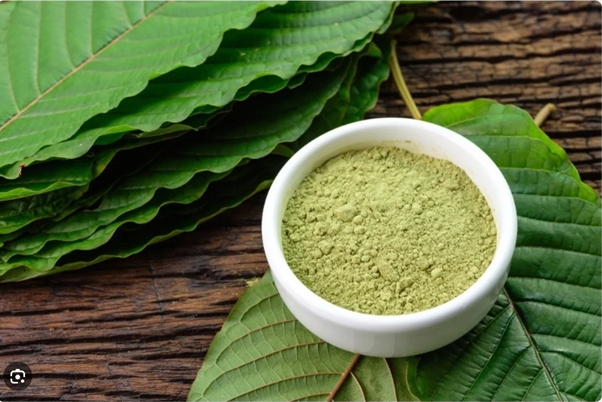
Kratom extract powder is a more concentrated form of kratom than standard leaf powder. It is produced by processing kratom leaf material to increase the alkaloid density per gram of the finished product. Because the concentration is higher than in standard powder, the buying decision involves a few additional considerations that do not apply in the same way when purchasing regular kratom powder. This checklist is designed to help buyers evaluate any kratom extract powder they are considering before placing an order.
The percentage printed on a kratom extract powder label refers to the concentration of mitragynine in the finished product by weight. A product labeled as 10% Kratom Extract Powder means that 10% of the product's weight is composed of mitragynine. This is a meaningful specification when it is backed by a certificate of analysis, and it is distinct from marketing language like "ultra-concentrated" or "maximum extract," which carry no standardized meaning.
Before purchasing, confirm whether the stated percentage is documented in a COA rather than simply printed on the label without verification.
The same standard that applies to regular kratom powder applies to extract: a batch number should be present on the product or packaging. The batch number is what connects the product to a specific set of lab results. Without it, there is no documented trail from the finished product to the test that was supposedly conducted on it.
At Botanical Remedies, the kratom extract category holds products to the same batch documentation standards described on the quality page. Batch numbers are part of the standard product record, not an optional feature.

A COA for a kratom extract should cover more than alkaloid levels alone. Because extract products are produced through a concentration process, contamination risks during processing are worth documenting. A complete COA for a kratom extract should include identity and origin confirmation, mitragynine percentage, adulterant screening, heavy metals testing, and biological safety markers.
Heavy metals including lead, arsenic, cadmium, and mercury are particularly relevant in concentrated products because the concentration process can also concentrate trace contaminants that were present in the raw material.
Kratom extract products vary in how they are formulated. The 10% Kratom Extract Powder is a straightforward mitragynine-standardized extract. The Enhanced Kratom Extract Powder offers a different approach, where a specific extract quantity is added to a base of standard kratom powder in a strain of the buyer's choice. Strain options include Green Bali, Green Thai, Green Malay, Red Bali, Red Kalimantan, Red Borneo, White Bali, White Thai, and over two dozen others.
Understanding the structural difference between a pure extract powder and an enhanced powder product is useful before deciding which format is appropriate. For buyers who want standardized extract concentration on its own, the 10% extract powder is the direct choice. For buyers who want the character of a specific strain combined with a measured extract addition, the Enhanced Kratom Extract Powder is the relevant option.
Extract products are also offered in capsule form. The 10% Kratom Extract Capsules contain the same mitragynine-standardized extract in a pre-measured capsule, rated 5.00 out of 5 with verified reviews. For buyers who want the concentration of an extract product without measuring powder manually, capsules offer a straightforward alternative with consistent sizing per capsule.
Extract products are a higher-stakes purchase than standard powder in the sense that more concentrated material raises the cost of poor quality. A vendor whose documentation, testing, and customer history are well-established is a safer choice for extract products than one whose track record is unclear.
Review counts, the availability of current COAs, the publication of batch numbers, and a transparent quality process are all signals that can be verified before any purchase is finalized. The checklist above does not guarantee a perfect purchase, but it systematically removes the guesswork that leads to buyer disappointment with any kratom extract product.