
Concentrated 7-OH products often sit on the same shelves, and appear in the same search results, as traditional kratom. Some are clearly labeled. Others use vague marketing that makes them hard to tell apart from natural leaf. Because the FDA, the DEA and several states now treat concentrated 7-OH as a separate and more serious category, it pays to know how to spot it. These six checks take less than a minute.
Check 1: Look at the Product Format
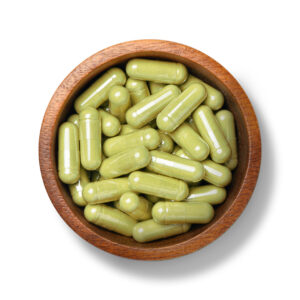
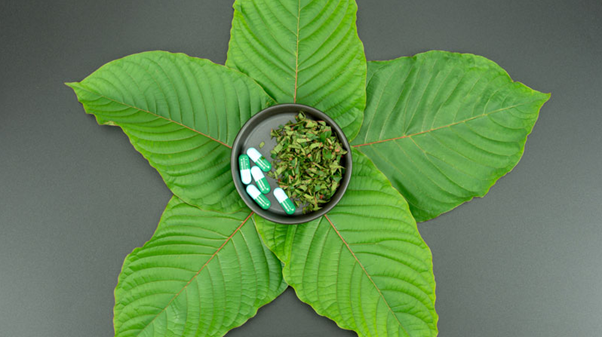
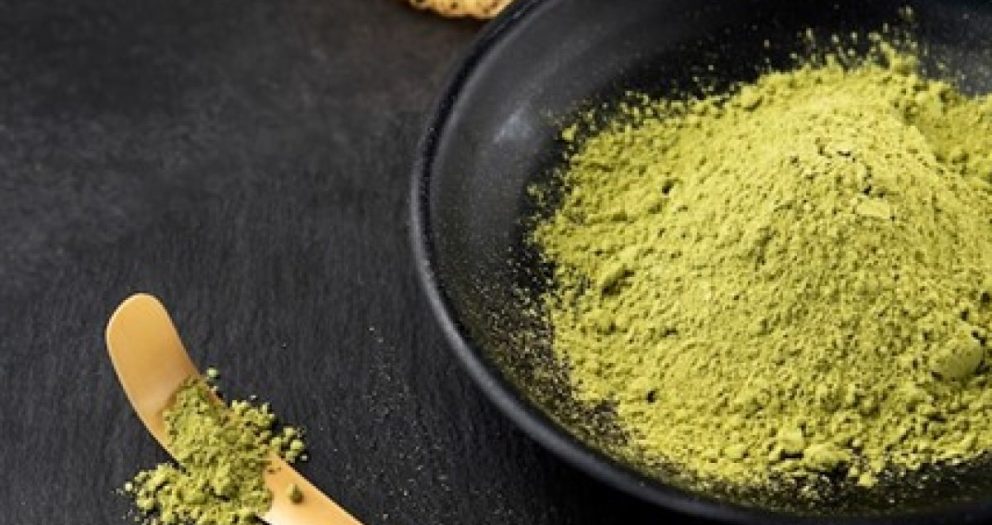
Natural kratom is usually sold as fine leaf powder or as capsules filled with that powder. Most concentrated 7-OH products come in different formats: pressed tablets, gummies, drink shots, dissolvable strips or small “pills” that look like candy or medication. The FDA’s 2025 warning letters specifically named tablets, gummies, drink mixes and shots. A different format is not proof on its own, but it is a reason to read more closely.
Check 2: Read the Front of the Package
Many 7-OH products advertise it directly. Watch for these words and abbreviations:
- 7-OH, 7OH, 7-hydroxy or 7-hydroxymitragynine
- Pseudo, pseudoindoxyl or MGPI
- MGM-15 or MGM-16
- “Alkaloid enhanced,” “semi-synthetic” or “advanced alkaloid”
- Brand names built around the number 7
Note that MGPI, MGM-15 and MGM-16 were temporarily placed in Schedule I on 26 August 2026, so any product naming them should be avoided entirely.
Check 3: Read the Ingredient List
A natural kratom product should list Mitragyna speciosa leaf, or leaf extract, and little else. Be cautious if the ingredient list names isolated alkaloids, lists 7-OH as an ingredient, or hides the formula behind a “proprietary blend.” Undisclosed ingredients are a red flag in any botanical product.
Check 4: Look for Milligram Claims
Concentrated products often state how many milligrams of 7-OH each piece contains. Natural leaf simply does not carry meaningful 7-OH per serving. A 2025 study in the Journal of AOAC International found only about 0.003% to 0.04% 7-OH in post-harvest leaf, compared with 22 to 75 milligrams per gram in some 7-OH products. If a label promises a specific 7-OH dose, you are not looking at natural kratom.
Check 5: Compare the Alkaloids on the COA
The certificate of analysis gives the clearest answer. In natural leaf, mitragynine is the dominant alkaloid and 7-OH is a trace component. Regulators now publish specific limits that show where “trace” ends:
- The DEA’s July 2026 proposal would schedule botanical kratom with more than 0.050% 7-OH by dry weight, or processed products with more than 1.00 mg per unit.
- Utah’s testing rules cap 7-OH at 0.4% of total alkaloids.
- Rhode Island caps 7-OH at 1% of total alkaloids, 0.5 mg per gram and 1 mg per serving.
If a product has no COA, or the COA leaves out 7-OH, you cannot rule it out. Our guide on how to read a kratom third-party lab report before you buy explains the alkaloid panel in detail.
Check 6: Watch the Marketing
Claims about being “stronger than kratom,” promises of specific effects, or comparisons to prescription drugs are warning signs. Responsible sellers describe effects as reported by users and avoid medical claims, because the FDA has not approved kratom for any medical use.
If a product fails any one of these checks, set it aside. Asking the seller for a batch COA, or choosing a clearly labeled natural leaf product instead, is always better than guessing.
What About Kratom Extracts?
Extracts concentrate the natural alkaloids of the leaf, mainly mitragynine, rather than 7-OH. Our Enhanced Kratom Extract Powder product page states that our extracts test between 10% and 12% mitragynine (MIT). For more background, read Kratom Extracts Explained: What Makes Them Different From Powder. Batch results are published on our lab tests (COAs) page.
Frequently Asked Questions
Is every kratom tablet a 7-OH product?
Not necessarily, but most concentrated 7-OH items use tablet, gummy or shot formats. Check the label and COA.
Can natural kratom contain any 7-OH?
Yes, trace amounts can form after harvest. Natural leaf levels are far below the limits regulators have proposed.
What if the label does not mention 7-OH at all?
Ask for a batch COA. Without one, you cannot confirm the 7-OH level.
This article is for general information only and is not legal or medical advice.
References
- FDA warning letter example: 7Tabz Retail LLC (June 2025)
- Federal Register notice of intent on 7-OH (6 July 2026)
- Federal Register temporary order for MGPI, MGM-15 and MGM-16 (26 August 2026)
- Journal of AOAC International study (2025)
- Utah Attorney General: kratom testing requirements
- Rhode Island Department of Health: kratom licensing


Write a comment
Your email address will not be published. All fields are required